





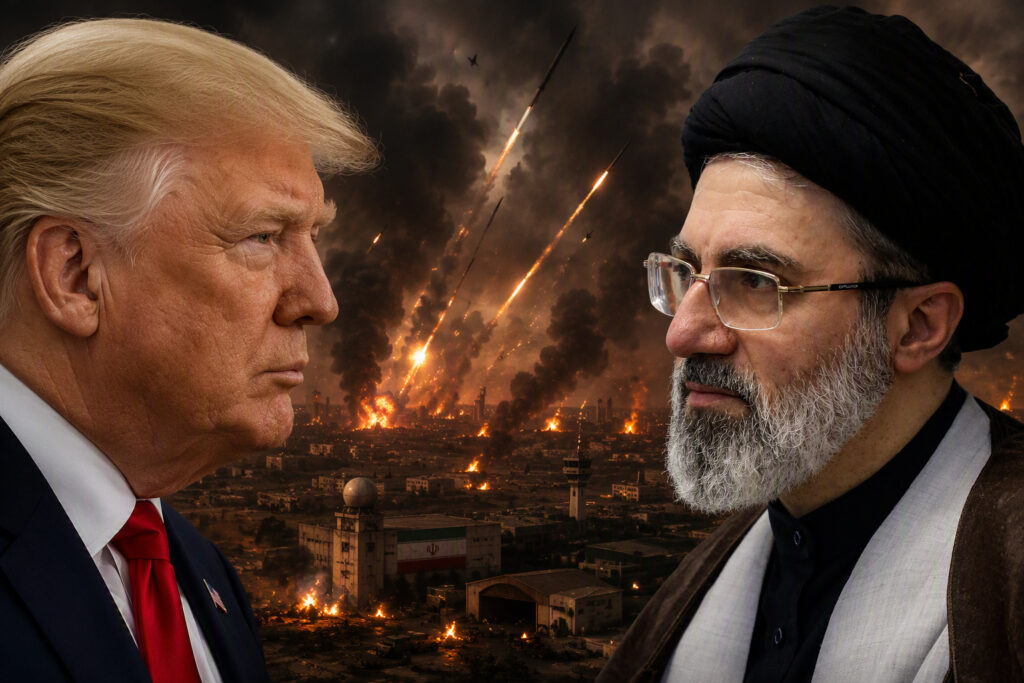
From Afghanistan and Iraq to Iran, the limits of US military power have become increasingly visible in the gap between battlefield victories and lasting political outcomes. Time and again, Washington has demonstrated overwhelming military strength, achieving rapid successes against adversaries, yet struggled to translate those victories into stable and sustainable endgames.
Afghanistan: A Swift Victory, A Long Defeat
To begin with, in 2001, US forces, backed by allied troops, toppled the Taliban government almost as quickly as they launched their offensive. The initial campaign was a remarkable military success. However, over the following years, Washington failed to achieve its broader strategic objectives, ultimately culminating in a humiliating withdrawal and the rapid return of an even stronger Taliban regime.
Iraq: Winning the War, Losing the Peace
A similar pattern emerged in Iraq. In 2003, the Saddam Hussein administration was swiftly overthrown as US-led coalition forces launched extensive aerial bombardment followed by a rapid ground offensive. Yet, despite the military victory, Washington struggled to contain the insurgencies, sectarian violence, and the rise of extremist groups such as the Islamic State.
Although Iraq today has a functioning government, the country remains far from stable, let alone a reflection of the long-term objectives many US policymakers had envisioned when they launched the invasion.
A Déjà Vu in Iran
Against the backdrop of these two conflicts, the unfolding events in Iran appear strikingly familiar. The repetition of Washington’s military approach has led many analysts to argue that the United States risks another strategic embarrassment, regardless of how emphatically President Donald Trump continues to portray the campaign as a success while claiming victory at every stage.
Meanwhile, the ongoing exchange of fire between US forces and the Iranian Revolutionary Guards has shown little sign of subsiding.
The 2025 Offensive
The latest chapter began in 2025 when Israel launched Operation Rising Lion, targeting Iranian military installations. Israel described the strikes as pre-emptive measures against what it claimed were Tehran’s preparations for an imminent attack.
The United States subsequently entered the conflict with Operation Midnight Hammer, carrying out strikes on Iran’s three major nuclear facilities at Fordow, Natanz and Esfahan. Washington declared that the operation had effectively destroyed Iran’s nuclear programme.
President Donald Trump announced that the United States had accomplished its military objectives. Iran, however, declared victory as well, claiming that its missiles and drones had successfully penetrated Israel’s sophisticated air defence systems and inflicted significant damage on Israeli military installations.
Tehran further portrayed its repeated retaliatory strikes against US military bases across the Gulf as evidence that it had exacted a substantial price from its adversaries.
The Return of War
The ceasefire, however, proved short-lived. The underlying disputes between the United States, Israel and Iran remained unresolved, paving the way for renewed hostilities just eight months later.
On February 28, 2026, the United States and Israel jointly launched another round of attacks against Iran, killing Supreme Leader Ayatollah Ali Khamenei along with several senior political and military figures.
The United States named its campaign Operation Epic Fury, while Israel referred to its offensive as Operation Roaring Lion. According to Washington and Tel Aviv, the operation marked the end of Iran’s 37-year authoritarian regime.
During the 38-day military campaign that followed, the Pentagon claimed to have struck nearly 13,000 targets across Iran, killing at least 40 senior military and intelligence officials. President Trump has repeatedly asserted that American forces severely degraded Iran’s missile and drone capabilities.
Yet these claims did not prevent Iran from retaliating. Iranian forces continued launching attacks on US military bases across West Asia, including those in Jordan and Iraq.
At the same time, Iranian missiles reportedly continued to evade Israel’s Iron Dome, Arrow, and David’s Sling air defence systems, striking military installations inside the country.
The Hormuz Crisis
Perhaps the greatest consequence for the rest of the world was the disruption of energy supplies.
Iran announced the closure of the Strait of Hormuz, targeting oil tankers and commercial vessels from US-allied Gulf states attempting to pass through the strategic waterway.
In response, the United States imposed what it described as a blockade of Iranian ports, preventing Iranian ships and tankers from operating freely.
Together, these actions effectively choked the flow of oil from the Gulf, sending crude prices soaring and severely disrupting the economies of countries heavily dependent on energy imports from the region.
A Fragile Memorandum
After weeks of diplomatic manoeuvring, intense rhetoric and mediation efforts led by several countries, a fragile Memorandum of Understanding was signed on June 17, 2026.
The agreement aimed to reopen the Strait of Hormuz and initiate a 60-day negotiating period. It envisioned detailed discussions on ensuring the free passage of commercial shipping, easing sanctions on Iran, unfreezing Iranian assets, providing compensation for damage caused by US and Israeli attacks and resolving issues related to Iran’s nuclear programme.
However, the agreement barely survived three weeks.
On February 8, fighting over control of the Strait of Hormuz escalated once again into a fresh cycle of strikes and counter-strikes between the two sides.
Washington’s Strategy
President Donald Trump appears to believe that military pressure and diplomacy can proceed simultaneously, with sustained military operations forcing Tehran to accept Washington’s demands.
In recent days, U.S. forces have reportedly expanded their targets beyond military installations to include critical infrastructure such as power plants, railway lines and bridges. The apparent objective is to weaken Iran sufficiently to compel its negotiators to accept American conditions at the negotiating table.
Can Iran Be Forced to Capitulate?
The reality on the battlefield, however, appears considerably more complicated.
Although Iran’s military capabilities may have been significantly weakened by sustained U.S. bombing, they have not been eliminated. For nearly every American strike, Iranian forces continue to respond with retaliatory attacks on U.S. military bases across the Gulf.
Meanwhile, the Strait of Hormuz remains closed, once again threatening countries that depend heavily on the region for their oil and gas supplies.
The uncertainty surrounding Washington’s strategy is equally evident. One day, President Trump declares his determination to completely destroy Iran’s military capabilities while dismissing diplomacy. The next, he claims that Tehran is eager to negotiate and expresses his own willingness to pursue a settlement.
The Pentagon maintains that U.S. forces are fully prepared and better equipped than ever, armed with a deeper understanding of Iran’s vulnerabilities.
Yet Washington’s strategy of alternating between military escalation and tactical pauses has ultimately handed Iran exactly what it needed: the time to recover, adapt and outlast American political will.
Also Read | Explained: Why India increased gold import duty to 15 percent amid rising external pressure



Trump’s Tariff Threat: Is India’s Russian Oil Deal a Target?
Middle East on Edge: Why the US Bombed Iran’s Nuclear Sites
Can Donald Trump’s ‘Golden Dome’ ever take flight without Canada cooperation?